3D Miniature House Entrance Laser Cut Guide
There is a distinct charm in the world of miniature making that captures the imagination like few other crafts. It transforms simple sheets of wood into intricate, tangible scenes that tell a story before you even step inside. At the heart of this creative process lies the 3D Miniature House Entrance Laser Cut, a digital design file that serves as the blueprint for crafting stunning dollhouse facades, dioramas, and shelf sitters. Whether you are a seasoned hobbyist looking to expand your portfolio or a small business owner seeking unique inventory, understanding how to leverage these layered vector files can elevate your projects from flat cutouts to three-dimensional masterpieces.
The Art of Layered Wood Design
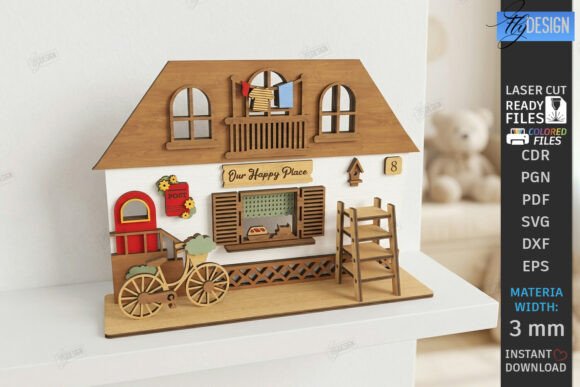
A 3D Miniature House Entrance Laser Cut is not merely a single image; it is a complex assembly of components designed to stack and interlock. Unlike traditional 2D cuts, these files utilize depth to create realistic architectural features such as porches, columns, decorative doors, and overhangs. The magic happens when multiple layers of balsa or basswood are laser-cut according to specific instructions and then glued together. This technique brings out textures and shadows that mimic real-world construction, adding a level of sophistication that is difficult to achieve with hand-carving alone.
The strength of this approach lies in its precision. Modern laser cutting technology allows for incredibly fine details, from the grain on a wooden door to the delicate trim of a coffee bar awning. When you work with a high-quality template, such as those designed for Glowforge or Cricut machines, you ensure that every piece fits perfectly. This precision reduces waste and frustration, allowing you to focus on the assembly and finishing touches that truly bring the miniature to life.
Understanding the File Specifications
Before diving into your first project, it is crucial to understand the technical requirements of the files you are using. A professional-grade Miniature House Entrance Laser Cut 3D Dollhouse Facade Laser Cut File typically comes packaged as a comprehensive zip archive. This collection usually includes:
- SVG Files: Essential for most modern cutting machines, offering scalable vector graphics that maintain quality at any size.
- EPS Files: Ideal for professional design software like Adobe Illustrator, providing robust vector data.
- DXF Files: Perfect for CAD software and older laser cutter interfaces.
- PNG Files: High-resolution raster images useful for previews or printing reference guides.
- PDF Files: Often contain the instruction manual, assembly diagrams, and color-coded guides.
One of the most critical aspects of these files is the color-coding system used to guide the machine. In many templates, a RED line indicates a CUT path, telling the laser to slice through the material completely. Conversely, a BLACK line indicates an ENGRAVE path, instructing the machine to etch surface details without piercing the wood. Misinterpreting these lines can ruin a project, so always double-check your software settings to ensure compatibility with your specific cutting machine.
Practical Applications Across Environments
The versatility of a Decorative Mini Door and Porch SVG extends far beyond the personal hobbyist's workshop. These designs have found their way into various professional and educational settings, proving their value as more than just cute decorations.
Creative Home Decor and Shelf Sitters
For adults aged 20–50 who appreciate interior design, creating a Coffee Bar and Beach House Diorama offers a personalized touch to home decor. These "shelf sitters" act as conversation starters and artistic focal points. Imagine a miniature beach house facade glowing softly under LED lights on a living room bookshelf, or a tiny coffee shop entrance sitting atop a desk. The ability to customize the scale and style means these pieces can fit seamlessly into modern, rustic, or eclectic interiors.
Professional Branding and Marketing
In the commercial sector, miniature models serve as powerful tools for branding and engagement. Real estate developers, architects, and interior designers often use detailed miniatures to showcase concepts to clients. A 3D Layered Wooden House Vector can be adapted to represent a specific property development or a boutique retail space. Furthermore, small business owners can sell these finished products as unique gifts or limited-edition collectibles, tapping into the growing market for handmade, artisanal goods.
Educational and Therapeutic Uses
Educators and therapists also find value in these projects. For students learning about architecture, engineering, or history, assembling a Miniature House Entrance Laser Cut provides hands-on experience with spatial reasoning and structural integrity. In therapeutic settings, the repetitive, focused nature of laser cutting and gluing can offer stress relief and mindfulness benefits, similar to adult coloring books but with a tangible result.
Maximizing Efficiency and Usability
Efficiency is key when working with digital templates. One of the primary benefits of using pre-designed files is the time saved on drafting. Instead of spending hours sketching and calculating measurements, you can download a ready-to-use file and begin cutting immediately. This streamlines the workflow, allowing creators to produce multiple units consistently—a vital factor for anyone running a small business.
However, usability depends heavily on preparation. Always test your settings on scrap wood before cutting your final materials. Factors like wood thickness, laser power, and speed vary between machines. If you encounter issues with the CUT BLACK line – ENGRAVE logic, do not hesitate to reach out to the seller. Most creators offer support and can provide alternative file types or adjusted PNG sizes if needed. Communication is essential for ensuring a smooth experience.
Recommendations for Success
To get the best results from your 3D Miniature House Entrance Laser Cut project, consider the following recommendations:
- Choose the Right Material: Basswood is generally preferred for its clean burn and minimal warping, while balsa offers easier cutting for very thin layers.
- Calibrate Your Machine: Ensure your lens is clean and your bed is level to avoid uneven cuts.
- Plan Your Assembly: Lay out all cut pieces before gluing to verify that nothing was missed during the cutting process.
- Finish with Care: Sanding edges lightly and applying a sealant or stain can transform raw wood into a polished, professional-looking finish.
Whether you are building a single piece for yourself or scaling up for a shop, the potential of these digital templates is immense. By selecting high-quality files and understanding the nuances of laser cutting, you unlock a world of creative possibilities. Remember to follow creators to stay updated on future releases, as new designs like seasonal themes or different architectural styles are constantly being developed. With the right tools and a bit of patience, you can turn a simple digital file into a breathtaking piece of art.