250 Years of Freedom Eagle: A Design Evaluation
The upcoming bicentennial of the United States Constitution and the broader 250th anniversary of American independence in 2026 has sparked a surge in patriotic creative projects. Among the most prominent visual assets emerging for this milestone is the 250 Years of Freedom Eagle. This design element combines traditional iconography with specific historical markers to create a cohesive theme for crafters, designers, and small business owners. For individuals evaluating digital assets for their next project, understanding the composition, versatility, and limitations of this specific design is essential for making an informed selection.
Defining the Visual Composition
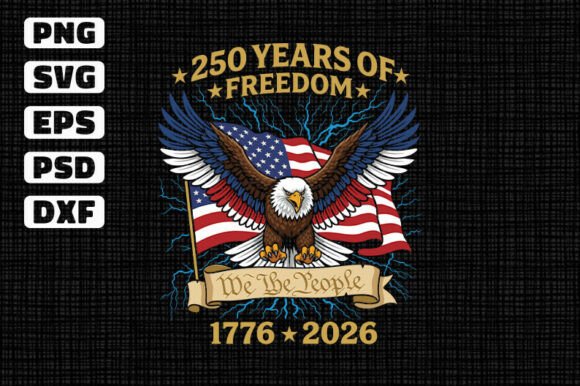
The 250 Years of Freedom Eagle is not merely a generic bird illustration; it is a structured graphic package designed to convey a specific historical narrative. At its core, the artwork features a detailed bald eagle, the national symbol of the United States, often depicted in a dynamic pose or clutching elements of the flag. Surrounding the central figure is a waving American flag, which adds movement and color contrast to the composition. A decorative banner typically frames the imagery, housing the critical text elements: "1776–2026" and the phrase "We The People."
The aesthetic leans heavily into a vintage style, utilizing textures, distressed edges, or muted color palettes that evoke a sense of history and nostalgia. This stylistic choice distinguishes it from modern, flat-design vectors. The inclusion of multiple file formats—specifically PNG, SVG, EPS, PSD, and DXF—indicates that this is a multi-purpose asset intended for both raster and vector-based workflows. The presence of a layered PSD file suggests that users can manipulate individual elements, such as adjusting the banner text or isolating the eagle, while the SVG and DXF files cater to cutting machines like Cricut and Silhouette.
Reasons for Interest in the Design
Interest in the 250 Years of Freedom Eagle stems primarily from the convergence of timing and thematic relevance. As the nation approaches the year 2026, there is a growing demand for merchandise and decor that specifically acknowledges this quadricentennial milestone. Generic "Happy Fourth of July" designs may feel insufficient for creators aiming to mark this specific historical juncture. The explicit "1776–2026" dating provides immediate context, allowing the end-user to recognize the significance of the item without needing further explanation.
Furthermore, the "We The People" inscription taps into the foundational language of the U.S. Constitution, appealing to those interested in civic pride and constitutional heritage. This makes the design particularly attractive for educational materials, government-related events, or community gatherings focused on patriotism. For commercial sellers, the specificity of the design offers a unique selling proposition compared to the saturated market of standard red, white, and blue graphics. It allows businesses to position their products as commemorative items rather than seasonal decorations.
Benefits and Versatility Across Platforms
One of the primary advantages of this design package is its format diversity. The inclusion of SVG and DXF files ensures compatibility with popular vinyl cutting machines, making it ideal for creating decals, stickers, and custom apparel transfers. The scalability of vector files means the design can be resized for a small tumbler sticker or a large outdoor banner without losing resolution. For those using screen printing or heat press techniques, the PNG files provide high-resolution raster images suitable for direct application on fabrics.
The EPS and PSD formats offer professional-grade flexibility. Designers working in Adobe Illustrator or Photoshop can deconstruct the layers to customize colors, replace text, or integrate the eagle into larger layouts. This adaptability supports a wide range of applications, including:
- Apparel: T-shirts, hoodies, and caps where the vintage texture pairs well with cotton blends.
- Drinkware: Mugs and tumblers, where the circular or cylindrical layout can be adapted from the banner design.
- Home Decor: Posters, signs, and canvas prints that utilize the full detail of the eagle and flag.
- Event Materials: Party invitations, table centerpieces, and banners for Independence Day or Veterans Day celebrations.
This breadth of utility reduces the need for creators to purchase multiple separate assets, streamlining the production process for various product lines.
Tradeoffs and Considerations
While the design offers significant utility, there are tradeoffs to consider before committing to its use. The vintage style, while historically appropriate, may not align with every brand identity or personal aesthetic. Projects requiring a clean, minimalist, or ultra-modern look might find the distressed textures and ornate banners visually cluttered. Additionally, the density of the design—including the eagle, flag, banner, and dual date ranges—can make it challenging to reproduce effectively on very small surfaces. On a small keychain or a tiny sticker, the intricate details of the eagle's feathers and the text legibility may suffer.
Another consideration is the specificity of the dates. While "1776–2026" is perfect for the current cycle, it limits the long-term shelf life of the design. Unlike a timeless "Stars and Stripes" motif that remains relevant indefinitely, this design becomes dated once the anniversary passes. Creators planning inventory for future years must weigh the risk of unsold stock against the immediate demand for the 2026 celebration. Furthermore, if the user intends to modify the text significantly, they should verify that the font used for "We The People" is included or available, as custom typography is often integral to the vintage aesthetic.
Situational Fit and Alternatives
The 250 Years of Freedom Eagle is a strong fit for situations where historical accuracy and commemorative value are paramount. It is particularly effective for:
- Commemorative Merchandise: Limited edition runs for the 2026 Bicentennial.
- Community Events: Parades, fairs, and town hall meetings celebrating American history.
- Educational Resources: Classroom materials or museum displays focusing on the founding era.
- Veteran Appreciation: Items honoring service members that emphasize the longevity of the nation's freedom.
However, alternatives may be worth considering for other scenarios. If the goal is to create evergreen products that will sell year-round without being tied to a specific anniversary, a simpler eagle silhouette or a classic flag wave design would be more prudent. For brands targeting a younger demographic that prefers bold, graphic, and less text-heavy imagery, a modernized vector interpretation of the eagle might resonate better than the vintage style offered here.
Additionally, if the project requires extensive customization beyond simple color changes—such as altering the eagle's pose or completely reimagining the layout—a raw vector illustration of just the eagle might offer more freedom than a pre-assembled composite design. In these cases, purchasing a base element and building the composition from scratch could yield a more unique result, albeit at a higher time cost.
Practical Decision-Making Insights
When deciding whether to incorporate the 250 Years of Freedom Eagle into a project, creators should first define their timeline and audience. If the target launch window is between now and late 2026, the design capitalizes on timely interest. Users should also assess their technical capabilities; while the provided formats are comprehensive, maximizing the potential of the PSD and EPS files requires proficiency in design software. Those relying solely on basic cut-file software should ensure the SVG is optimized for their specific machine to avoid weeding issues with fine details.
Ultimately, this design serves as a robust tool for those seeking to honor the nation's history with visual depth. By balancing the rich detail of the vintage style with the practicality of multiple file formats, it addresses the needs of both hobbyists and professionals. However, its success depends on matching the design's specific historical focus with the right product and market timing. For the right application, it offers a compelling way to celebrate 250 years of freedom, but for general, non-specific uses, simpler alternatives may prove more versatile.